METALS & MINERALS
Zinc and Lead
Zinc & Lead Mining The metal you’ll find in medieval, astronomical tools, space suits and almost every home on earth. In cities, zinc is used to coat steel bridges and buildings to protect them from corrosion. And new ways are being found every day to shape the future with zinc.
With its many uses, it’s essential that the zinc all around us is sourced in a responsible way. At Trans Africa Container mining , we’re committed to making sure that happens.
Our zinc and lead business combines world-class assets with global marketing reach and expertise.
We mine and process zinc and lead ores in the key mining regions of Australia, South America. And, we smelt and refine zinc and lead at processing operations in Australia, Canada, Spain, Italy, Germany, the UK and Kazakhstan.
We also source and recycle zinc and lead materials in Europe and North America.
Through our marketing activities, we sell zinc and lead concentrates; zinc and lead metals produced from concentrates; and valuable by-products such as sulphuric acid.
We also sell gold and silver, which are typically mined together with zinc and lead ores.
We market zinc and lead not only from our own facilities, but also from third-party producers.
Zinc and lead in figures - 2020
Uses of zinc and lead
Zinc
The Zinc Mining Process
The zinc mining process is conducted primarily underground, with more than 80 percent of all zinc extracted beneath the Earth’s surface. Eight percent of zinc is mined in open pits, with the remaining 12 percent being mined through both methods. Once it’s removed from the earth, the concentrate is roasted at a temperature of 950 degrees Celsius, causing zinc, sulfur and iron oxidization. After the zinc and iron oxides are reduced to powder form and leached with diluted sulfuric acid, the solution is neutralized and contaminants are removed via filtration. In the foundry, the zinc goes on to take its final form.
ZINC MINING AND PROCESSING:
From coatings to compounds, zinc is used in many areas of our lives. Whether it’s used in the home or an industry setting, zinc remains an important material. Under the below topics, there are many more specific ways in which zinc is part of our work and our lives. Zinc is mainly used to galvanise steel or iron – that is, to apply a zinc coating to stop it rusting.
Galvanised steel is used in buildings, cars, white goods and electronics.
The strength and flexibility of zinc alloys mean they are widely used to create die casts for industrial uses – for example, in the production of car or machine parts. Zinc is also used to make brass and bronze.
Zinc oxide is mainly used in the production of rubber, while zinc sulphide has uses such as X – ray screens, in optics, and as a pigment.
PENNIES

Since 1982 pennies have been made not of almost solid copper as before, but of 98% zinc with a thin coating of copper. The reason is economic; zinc is by far the cheaper metal. The thin coating of copper is necessary so we don’t confuse pennies with dimes; they’re about the same size. Zinc was also used to make pennies during the Second World War when copper was needed for the war effort. Those pennies were made of steel, with a zinc coating as a rust preventative.
DIE CASTINGS
Several parts of most cars, including carburetors, door handles, and fuel pumps, are die-cast parts made of zinc. Zinc is ideal for this purpose because it doesn’t shrink upon solidification from the liquid state, so a true-dimension casting can be made.
TIRES
About 20% zinc oxide is added to automobile tires to strengthen them and help in heat dissipation.
PHARMACEUTICAL PRODUCTS
Zinc is used in diaper-rash medicine, zit medicine, anti-itch creams and lotions (e.g., calamine lotion), and dandruff shampoo.

VITAMIN PILLS
Zinc is a necessary trace element in the human body. Your immune system cannot operate properly without it, and you would quickly die of disease. Most vitamin pills contain zinc as a mineral supplement. One brand of pill (Centrum) states that it contains everything “from A to Zinc”. Zinc is also found in many foods like red meat and dairy products.
GALVANIZED METAL
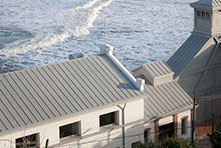
Iron or steel is commonly coated (galvanized) with zinc to prevent it from rusting. Trash cans, nails intended for outdoor use, guard rails along highways, chain-link fences, metal roofs, and gutters and downspouts are commonly made of galvanized steel.
PAINT
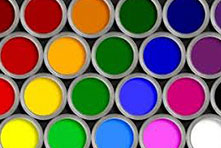
Zinc oxide, a pure white powder, is the opacifier in much paint. Without it the coverage would be poor because previous coats of paint would show through the new one. The zinc oxide renders the paint almost completely opaque, even in thin films.

SUNBLOCK
Zinc oxide is opaque not only to visible light but to ultraviolet light as well, and so makes an excellent sunblock. If you see someone on the beach with a white nose, that’s zinc oxide.

BRASS
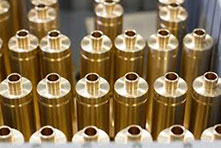
Brass, an alloy of copper and zinc, is stronger than both metals alone. Brass is commonly used where strength is a factor, as in the casings for bullets, brass handrails in theaters and restaurants, brass valves in bathroom faucets, gears in clocks and watches, etc. The attractive gold color of brass also lends it to many decorative uses in the home, such as lamps, door handles and locks, curtain rods, and lighting fixtures. Any of you who play trumpet, trombone, or any other brass instrument in your school band or orchestra are using zinc as well.

BATTERIES
Nearly all dry cells, such as the batteries used in flashlights, used to have zinc casings, and the zinc was necessary to the energy production. Nowadays we have more powerful batteries, but inexpensive zin
batteries are still on the market


Lead

Lead is a very soft, blue-gray, metallic element. It is primarily produced from the mineral galena. It has been used since antiquity
The principal method of extracting lead from galena, which is its most prominent ore, is done by pyrometallurgical method of roasting to melting the ore. In other words, the ore is converted to the oxide, and the oxide reduced with coke in a blast furnace.
Uses of Lead
Water pipes that date back to the Roman Empire, glazes on prehistoric ceramics, and the cosmetic kohl, used by ancient Egyptians to darken their eyelids, are a few examples of ancient uses of lead. Today, lead, which has been mined on all continents except Antarctica, is one of the most important metals to industrialized economies.
Lead is one of the Earth’s fundamental substances. An element that occurs naturally in the
soil and the air, lead has a long history as on of mankind’s most useful metals.
In ancient times, it was a by-product of silver production but its characteristics – corrosion
resistance, low melting point and malleability – soon made lead a desirable and commonly
used product. Egyptians used lead for sculpture, sinkers for fishing nets, jewelry and dishes.
Romans used large amounts of lead for lining water supply lines and cisterns, for roofing
and shipbuilding, and as weights, cooking pots, and wine sweeteners. As a result, lead
poisoning was common in Roman times.
Lead exposure continues to pose serious problems today, even though much is now known
about lead and its adverse effects. Exposure is difficult to control because, once lead is
removed from ore, it cannot be disposed of or changed in the environment (it can be
recycled and reused, however).
Ninety percent of lead dust in surface soil will be there 70 to 200 years later.
Lead finds its way into modern life in many forms. A large proportion of the lead used today
serves the automobile industry in components such as storage batteries, radiators and solder
for joints. Lead is an important part of chemical tank liners and of radiation shields in
telephone and power cable conduit. It also is used in solder for plumbing and some paints,
especially those for ships where corrosion can be significant problem. Bullets, pottery,
crystal glassware, wire and stained glass windows all may require lead.
Safety ana Health Awareness
LEAD IN INDUSTRY
HEALTH EFFECTS
Lead can be inhaled, ingested, and, occasionally, absorbed through the skin. Most industrial
exposure is from breathing inorganic lead dust and fumes. Eating, drinking and smoking on
the work site or carelessly handling contaminated objects can result in unintentional
exposure to lead.
Once it enters the body, lead is stored in three places: the blood, body organs and bones.
Lead stays in the blood about a month and in soft tissues for several months, it can remain in
the bones for decades, a potent poison, it affects the brain and nervous system, reproductive
capabilities, the kidneys, the digestive system, and the ability to make blood.
Lead poisoning can be acute (high level of exposure) or chronic (low exposure or over a
long period of time). Chronic poisoning is more common in industrial settings where small
amounts of lead gradually can build in the body and result in temporary or permanent
damage. An elevated blood lead level indicates that lead is building in the body faster than it
can be eliminated. There is a wide range of symptoms, many of which imitate other
diseases.
THE LEAD STANDARD
REQUIREMENTS THE LEAD STANDARD
The “lead standard,” developed by the Occupational Safety and Health Administration,
outlines practices for reducing lead exposure and for protecting the health of workers. No
employee should be exposed to lead at or above concentrations of 50 micrograms per cubic
meter of air (mcg/M3), OSHA’s permissible exposure limit (PEL). In all industries, lead
concentrations of 50 mcg/m3
of air through adequate ventilation and work practice controls.
If concentrations are higher, appropriate respirators must be worn by employees to keep
their exposure below 50 mcg/m3
of air. Employers also must provide clean showers, change
rooms and lunchrooms for their employees. The standard also specifies monitoring
requirements, methods for reducing lead exposure, medical surveillance of employees to
evaluate whether they are absorbing excessive lead, and medical removal protection in cases
of overexposure.
Lead standard requirements are based on airborne concentrations of lead in the workplace. It
should be remembered, however, that ingested lead dust can cause problems, even in work
areas where airborne lead is below the PEL.
If lead exposure in the workplace is a possibility, and employer must
train workers about the health effects of lead and the requirements of the lead
standard, and
monitor for airborne lead concentrations during each shift, in each work area, and
job classification.
If monitoring shows lead levels above 30 mcg/m3
of air (OSHA’s action limit) but below 50
mcg/m3
of air (PEL), an employer also must-
repeat monitoring every six months,
repeat training annually,
provide medical surveillance, including blood sampling for lead and zinc
protoporphyrin, medical exams and consultation,
provide medical removal protection for employees with excessively elevated blood
lead levels.
If monitoring shows lead above mcg/m3
, an employer must –
repeat monitoring every three months,
post warning signs in work areas where lead exposure exceeds the PEL,
install local exhaust ventilation or institute other engineering or work practice
measures to limit employee exposure so that it does not exceed the PEL,
provide effective respiratory protection for employees and training in its use, until
the PEL can be reached through engineering or work practice controls,
provide protective clothing and equipment, including overalls, gloves, goggles, and
shoes, and make sure employees use them,
provide clean showers, changing rooms and separate storage for street clothes and
soiled work clothes and make certain employees shower and change before leaving
the work site,
install a lunchroom with air conditioning and positive pressure and make sure
employees wash before eating, drinking or smoking (Do not allow these activities in
work areas), and
provide medical surveillance and medical removal protection.
Chelation is a medical treatment used to remove lead from the blood. Treatment for lead
poisoning is to be done only under the supervision of a physician. It is not to be used
routinely to keep blood lead at acceptable levels.
All items above summarize major requirements of OSHA’s lead standard (29 CFR
1910.1025). Employers should know and comply with ALL provisions of the standard.
PROTECTIVE PRACTICES
Employers should provide employees with adequate training, facilities, and equipment so
that, whenever possible, they are able to avoid breathing or eating lead fumes or dust. All
employers should be required to follow these safety practices to protect themselves.
Use the ventilation systems. Be aware of how these systems work and make sure
they are working correctly.
Keep work areas clean. Do not use compressed air to remove lead dust. Instead, use
a high efficiency particulate air (HEPA) vacuum.
Do not eat, drink or smoke in work areas. Use a properly constructed lunchroom or
other separate area free of lead dust or fumes.
Thoroughly wash hands and face before eating.
Use the correct respirator. Make sure it is clean, in good repair and fits properly.
Store street clothes in separate locker from where work clothes are stored.
Shower, wash hair and change into clean clothes and shoes before leaving the
workplace. Lead dust on work clothes can contaminate an employee’s home and
affect his or her children. (If an employee exhibits elevated blood lead levels, his or
her children also should be tested).
Eat a well-balanced diet; proper nutrition can reduce lead absorption. Fasting can
increase the body’s rate of absorption.
Effects Lead Poisoning
Short-terms Effects to Lead Poisoning
Fatigue
Headache
Irritability
Metallic taste in mouth
Poor appetite
Reproductive problems.
Sleeplessness
Stomach upset
Long-term Effects to Lead Poisoning
Kidney problems
Memory loss
Muscle and joint pains
Premature loss of teeth
Shortened life span
Stomach aches and pains, nausea
Weak wrists and ankles
Weight loss
Extreme cases of lead poisoning can result in convulsions, coma, or death.
Trans Africa Containers Mining SARLU: Zinc & Lead Mining in Trans Africa Mines
Introduction to Zinc & Lead Mining SARLU
Zinc & Lead Mining Mining stands at the forefront of mineral extraction and resource management in the African continent, specializing in the mining of zinc and lead. With a commitment to sustainable practices and innovative technologies, this company plays a pivotal role in harnessing the rich mineral resources found within the diverse geological landscapes of Africa. The focus on zinc and lead mining not only contributes to local economies but also supports global industries reliant on these essential metals.
The Importance of Zinc and Lead
Zinc and lead are critical metals that serve various industrial applications. Zinc is primarily used for galvanizing steel to prevent corrosion, making it indispensable in construction, automotive, and infrastructure projects. Additionally, zinc plays a vital role in manufacturing batteries, particularly for electric vehicles, which are becoming increasingly prevalent as the world shifts towards sustainable energy solutions.
Lead, on the other hand, has been historically significant due to its use in batteries, radiation shielding, and various alloys. Despite concerns regarding its toxicity, lead remains crucial for specific applications where its unique properties are unmatched. The demand for both metals continues to grow as industries evolve and seek more efficient materials.
Zinc & Lead Geological Overview
The geological formations across Trans Africa are rich with minerals, particularly in regions known for their sedimentary basins and volcanic activity. These areas often contain high concentrations of zinc and lead ores such as sphalerite (zinc sulfide) and galena (lead sulfide). The mining operations conducted by Trans Africa Containers Mining SARLU leverage advanced geological surveys and exploration techniques to identify viable sites for extraction.
The company employs state-of-the-art technology for mineral exploration, including geophysical methods like magnetic surveys and electromagnetic techniques. These tools help delineate ore bodies beneath the surface, ensuring that mining efforts are both efficient and environmentally responsible.
Zinc & Lead Mining Techniques Employed by Trans Africa Containers Mining SARLU
Trans Africa Containers Mining SARLU utilizes a combination of traditional mining methods alongside modern innovations to optimize their operations. Key techniques include:
- Open-Pit Mining: This method is employed when ore deposits are located near the surface. It involves removing overburden (the soil and rock covering the ore) to access the minerals below. Open-pit mining is favored for its cost-effectiveness and efficiency in extracting large volumes of ore.
- Underground Mining: For deeper deposits or those located beneath populated areas or sensitive environments, underground mining techniques such as room-and-pillar or cut-and-fill methods are utilized. These approaches minimize surface disruption while allowing access to valuable resources.
- Hydrometallurgical Processes: To extract zinc from its ores efficiently, hydrometallurgical processes such as leaching are employed. This involves using chemical solutions to dissolve zinc from ore before recovering it through precipitation or electrolysis.
- Sustainable Practices: Recognizing the environmental impact of mining activities, Trans Africa Containers Mining SARLU integrates sustainable practices into their operations. This includes waste management strategies that recycle water used during processing and rehabilitating mined land post-extraction.
Economic Impact of Zinc & Lead Mining
The economic implications of zinc and lead mining extend beyond mere profit margins; they encompass job creation, community development, and infrastructure improvements within local regions. By establishing operations in various African countries, Trans Africa Containers Mining SARLU contributes significantly to local economies through direct employment opportunities as well as indirect jobs created within supply chains.
Moreover, investments made by the company often lead to enhanced infrastructure—such as roads, schools, and healthcare facilities—benefiting communities long after mining activities cease. The revenue generated from mineral exports also provides governments with funds necessary for public services and development projects.
Challenges Facing Zinc & Lead Mining in Africa
Despite its potential benefits, zinc and lead mining in Africa faces several challenges:
- Regulatory Environment: Navigating complex regulatory frameworks can be daunting for mining companies operating across different jurisdictions within Africa. Compliance with environmental laws while maintaining operational efficiency requires careful planning.
- Market Volatility: The prices of zinc and lead can fluctuate significantly based on global demand dynamics influenced by economic conditions worldwide. Companies must remain agile to adapt their strategies accordingly.
- Environmental Concerns: While efforts are made toward sustainability, concerns about pollution from mining activities persist among local communities and environmental groups alike. Addressing these concerns through transparent communication is crucial for maintaining social license to operate.
- Infrastructure Limitations: In some regions where Trans Africa operates, inadequate transportation networks can hinder efficient logistics for transporting mined materials to markets or processing facilities.
Future Prospects for Zinc & Lead Mining
Looking ahead, the future prospects for zinc and lead mining within Trans Africa Mines appear promising due to several factors:
- Growing Demand: As industries transition towards greener technologies—such as electric vehicles—the demand for both zinc (for battery production) and lead (for traditional batteries) is expected to rise significantly over the coming years.
- Technological Advancements: Continued investment into research & development will likely yield new extraction methods that enhance recovery rates while minimizing environmental impacts further solidifying Trans Africa’s position as an industry leader.
- Strategic Partnerships: Collaborations with international firms can provide access not only capital but also expertise necessary for navigating complex market landscapes effectively enhancing operational capabilities overall.
- Focus on Sustainability: As global awareness regarding climate change increases so does pressure on companies like Trans Africa Containers Mining SARLU—to adopt more sustainable practices throughout their supply chains ensuring long-term viability amidst evolving regulations surrounding resource extraction globally
Conclusion: Commitment Towards Responsible Resource Management
In conclusion ,Trans Africa Containers Mining SARLU exemplifies how responsible resource management coupled with innovative practices can drive success within challenging environments . By focusing specifically on ZINC&LEADMININGinTransAfricaMines ,the company not only meets current market demands but also paves way forward towards sustainable growth benefiting both stakeholders involved along journey .
Through strategic investments ,community engagement initiatives ,and adherence strict environmental standards ,Trans Africa Containers Mining SARLU sets benchmark others aspire achieve ensuring bright future ahead not just themselves but entire region they operate .